Sunday, October 21, 2018

Hello From Sandra Masters


*Originally Posted to Sandra Master's Blog.*

Hope this finds you in the best of health and that we all have a good year ahead of us.  Sandra Masters

For me, it has been a year of awakenings and for that reason, I am thrilled to announce the November 5th release of Book Six in the Duke Series – THE BLUE-EYED BLACK-HEARTED DUKE.  This novel idea came to me in a dream of a red wolf aside Radolf, The Duke of Wolferton. In the background were images of a stained glass piece in a chapel featuring said red wolf and an archangel wielding a blazing lightning bolt sword. This book also represented a departure from my more traditional Regency stories in that the characters led me into the FANTASY  world of Regency Paranormal.  There are no vampires, werewolves, or shape shifters, but these are spiritual guardians of my beloved duke according to a Legend and the Prophecy in the prologue. 
If you go to my website: https://www.authorsandramasters.com, and subscribe to it, you will receive a free download of the entire First Chapter. To entice you further, below is the blurb.

How do you tempt a sinner?—Offer him a saint!

Sizzling, spicy page turner Regency romance
with an element of fantasy supernatural.

Dark, dangerous, brooding and in his eyes unredeemable, Radolf Wolferton, Duke of Wolferton, doesn’t fear death but welcomes it. Guilt-ridden because of his sinful past, the tormented hero of the Waterloo wars, honor-bound, believes he is undeserving of love and closely guards his black heart against love though the family prophecy predicts otherwise.
            Powerfully drawn to him, Jaclyn Moreux, his ward, cannot deny his allure and the sizzling attraction that grows. Lured by his seductive pull, there are danger and passion in his embrace.
            Can Jaclyn help Radolf conquer the internal demon who threatens their future and recognize that a higher supernatural power destines their love?
            Can Radolf surrender to the supernatural power that speaks through the stained glass portrait of his red wolf persona and the archangel to fight for the woman he loves despite the pitfalls?


One night he met with temptation and it bested him. Radolf, Duke of Wolferton, had a reputation as a rake which he never wanted to uphold. Yet a glistening thread of goodness was tattooed on his heart.


https://amzn.to/2QqJPug          Amazon U.S.     
http://bit.ly/2ybd4ts                  The Wild Rose Press    
https://amzn.to/2Rnb9e4          Amazon U.K.      
https://amzn.to/2NmHRsW      Amazon Australia    
Available for pre-order now. Official world-wide release is on November 5th.

A  unique fact about this character is that Radolf discovered in his ten years traveling the Ottoman Empire a unique flower. With a love of all things Turkish, he cultivated…


The Turkish Halfeti Black Rose


Halfeti Rose appeared to verify that Halfeti, Turkey was the only place in the world where these unusual roses prospered. The pitch-black rose appeals to women because of its rarity and also its association with darkness. It depends on whether you seek the dark side of the rose in its morbidity or the light side in its magic.

 We are told these roses appear black to the naked eye, and are grown only in small quantities in the village of Halfeti, Turkey, which our hero, Radolf, Duke of Tremayne, visited on occasion.  Water seeps in from the Euphrates River which has a unique pH level. On a first viewing, the rose is black unless one takes a magnifying glass to inspect it.

Black roses aren’t a natural variation that you can purchase from your local nursery; they’re much more elusive and EXPENSIVE than that.  Sometimes called Black roses, they are also known as the Turkish Halfeti Rose, Arab Bride or Arab Beauty, and bloom in small numbers. 
Visit www.authorsandramasters.com and click on the dashboard BLOG, and you can scroll down to learn everything about this mysterious rose.

Here’s an excerpt for your enjoyment, entitled THE KISS

 Before he could think, fingertips skimmed each other. A smile opened slowly, her upper lips a single breath away, her tongue a slither of invitation one moment, stilled the next, only to venture closer again. Slippery, dazzling the senses, forbidden, but desirable in its implication, the thrill spiraled higher and higher into a mad vortex of lust, pure, and—simple. A sin so delightful, it spun around to make one unable to resist, to give everything for her touch—the infinite pleasure. She moved her mouth closer until there was no space left to hide—only to join in a kiss of blissful ecstasy. Ahh, he never believed it possible for him to feel such sensations again.
            Hope you enjoyed this reading.
            Sandra Masters, Unapologetic Storyteller

                                    
The release date is November 5, 2018 for this Regency Fantasy Romance, is available for pre-order for a limited time at:   Buy Link HERE


Email Address: sandramastersauthor@gmail.com
Newsletter sign up www.authorsandramasters.com

Go to my website: Authorsandramasters.com
to sign up for my Newsletter and receive the First Chapter


Wednesday, September 26, 2018

Cordwainers and Cobblers by Sandra Masters


Cordwainers and Cobblers
A Brief History
Research by Sandra Masters, Regency Novelist, September 2018
Fabulous Shoes and Dancing Slippers


 On the Left:    Silk Shoes with Buckles,French, c. 1760's. @Bata Shoe Museum.
On the Right: Silk and Cordovan leather dancing slippers@Bata Shoe Museum


My Book Six, The Blue-Eyed Black-Hearted Duke, Book Six, Regency Fantasy Romance,
has a secondary character whose father is a Cordwainer Guild Merchant with factories/shops in England and France. My research into the fabulous dancing shoes for women and boots for both men and women became an epic project.


                                       How do you tempt a sinner?—Offer him a saint!

The release date is November 5, 2018 for this Regency Fantasy Romance, is available for pre-order for a limited time at:   Buy Link


Dark, dangerous, brooding and, in his opinion, unredeemable, Radolf, Duke of Wolferton, doesn’t fear death but welcomes it. Guilt-ridden because of his sinful past, the tormented hero of the Waterloo wars, honor-bound, believes he is undeserving of any woman’s love and closely guards his black heart.
            Powerfully drawn to him, Jaclyn Moreux, his ward, cannot deny his allure and the sizzling attraction that grows. She is lured by his seductive charm and the danger and passion in his embrace. But a treacherous villain sets about disparaging the duke to Jaclyn with lies and half-truths.
            Jaclyn vows to help Radolf conquer his demons and accept the supernatural powers that predestines their love.

 
            Back to the fabulous shoe wear, historically, there was a distinction between a cordwainer, who made luxury soft shoes and boots out of the finest leathers, and a cobbler, who repaired them. The word "cordwain," or "cordovan," represents the leather produced in Córdoba, Spain. The term cordwainer (also "Corviser") has origins as early as 1100 AC in England.  Medieval cordovan leather not only was used for the highest quality shoes, but cordwainers also used domestically produced leathers and were not solely producers of luxury footwear.
            A cordwainer's trade contrasts with the cobbler's trade, according to a tradition in Britain that restricted cobblers to repairing shoes. The usage distinction is not universally observed, as the word cobbler is widely used for tradespersons who make or repair shoes. A major British dictionary says that the word cordwainer is archaic, "still used in the names of guilds, for example, the Cordwainers' Company," but its definition of cobbler mentions only mending reflecting the older distinction.


                               The above are examples of specialty shoes and slippers.

In the historic London guild system, the cobblers and cordwainers were separate guilds, and the cobblers were forbidden from working in new leather. Historically, cobblers also made shoes but only used old leather recovered from discarded or repaired shoes. 

                                          A cordwainer’s workstation in Capri, Italy

Today, many makers of bespoken shoes will also repair their work, but shoe repairers are not normally in a position to manufacture new footwear. In London, the historically controlled occupation of cordwainer became monitored by the Guild of the Worshipful Company of Cordwainers. They were granted a royal charter of incorporation in 1439 but had received their first ordinance in 1272. The ward of the City of London named Cordwainer is where most cordwainers lived and worked in England.

            The shoe industry, cordwainers and cobblers, have a rich history, and a great deal of information is available via the internet. This snippet of research is to acquaint readers with this fascinating occupation.

Posted By: Sandra Masters
Email Address: sandramastersauthor@gmail.com
Newsletter sign up www.authorsandramasters.com

Resources: Cordwainer, From Wikipedia, the free encyclopedia

Tuesday, August 07, 2018

BAKING With KEYWORDS by Cj Fosdick

Every published  book, like every other marketed product, has keywords that identify its genre and basic content—kind of like ingredients in a recipe. They affect ranking, sales and SEO (Search Engine Optimization). Keywords for my Accidental Series are Time Travel, Romance, Suspense, and sometimes, even Western. I like to think my books offer even more ingredients: a good pinch of humor, a cup of comparative culture, a pint of history, a box of animal crackers, folded into settings well creamed with a mixed-nut addition of characters beyond those who reflect red hair and green eyes.

How does one begin to pigeon-hole a multi-genre book?  Compare it to shopping for a mild salsa, only to find it burns like wasabi and raw cayenne. This became clear to me when some reviewers confessed PLEASANT surprise, admitting the Accidentals were not what they expected, or even what they were used to reading.  Here is a example of how my 45th (recent Amazon reviewer) was surprised by reading “The Accidental Wife”:

 This is an amazing book! I am still reeling from it! Normally, I do not read westerns, or fantasy, just stick to romance for the most part. Reading the description to this book, I was intrigued by the unique plotline, so I decided to read it. It surpassed all my expectations!  This book is well written, full of the introspection and definition of unforgettable characters. It is a love story and at the same time, it is a glimpse at what life was like for the settlers of Wyoming. There is an interracial marriage of a part Sioux Indian and our protagonist. He is the most adorable, simple and intense man I have read in a long time. He is cultured and yet in recognition of his roots, he is in tune with the Earth, willing to live off the land in peace with his family.  5 stars—An Amazing Story you will not want to put down!  (BOTH Accidentals on sale.)  https://amzn.to/2IdLXFh                                  

Diana Gabaldon’s Outlander series must have encountered similar problems with genre description, maybe because DG used her scientific background and love of research to show how Claire—a contemporary doctor—could outsource her medical knowledge 200 years into the past. For me, it was fascinating to see how resourceful and creative a strong, intelligent woman could be in an era that killed witches and honored the superiority of brawny warriors and flawed Kings. The history/culture element in her series was enlightening. The romance and character conflict was hot; the battles were exciting.


Her books were promoted as Time Travel, Fantasy or Romantic, but more in the Mainstream vein.  A multi-genre book is like a good recipe with numerous ingredients. Until you taste the final product, you may not know the end product is a treat to repeat. By virtue of nine best sellers and a TV series on Starz, DG baked a feast that has a over 33,000 Amazon reviews, a million fans…and the bucks to prove it.  Color me green!


Amazon    WildRose Press     B&N     iTunes    Cj’sNewsletter     FB

Friday, July 13, 2018

Character Names that Sing! by Cj Fosdick


Uriah Heep, Pippi Longstocking, Ichabod Crane, Ebenezer Scrooge, Holly Golightly, Huckleberry Finn, and Katniss and Primrose Everdeen. Who can ever forget character names that sing in the classic stories and films we all love?  No doubt the authors who created them set out to tweak memorable impressions of the characters they named, as well as the titles of their books. Would their novels be less memorable…or less successful with more pedestrian names and titles? Is there a psychology involved in these choices?  Do supporting characters need pedestrian names to make the main characters more memorable? Villain names can swing either way.

I spend an inordinate amount of time choosing character names and book titles. My character list was long for book three in my Accidental Series--The Accidental Heiress. The process is more disciplined than accidental, however. Because the book was set in Ireland, it took several days to research, google and compile a master list of Irish first names and surnames with brief meanings. Did the names trip on the tongue and fit character profiles?  Were they true to the era, country and culture?  Too modern?  Too American?  Too close to other character names? Did the syllables vary in both names?  Did both first and last name end in the same letter or syllable?  Sometimes that works, sometimes not: (Mary McGary or Galen Moran).  


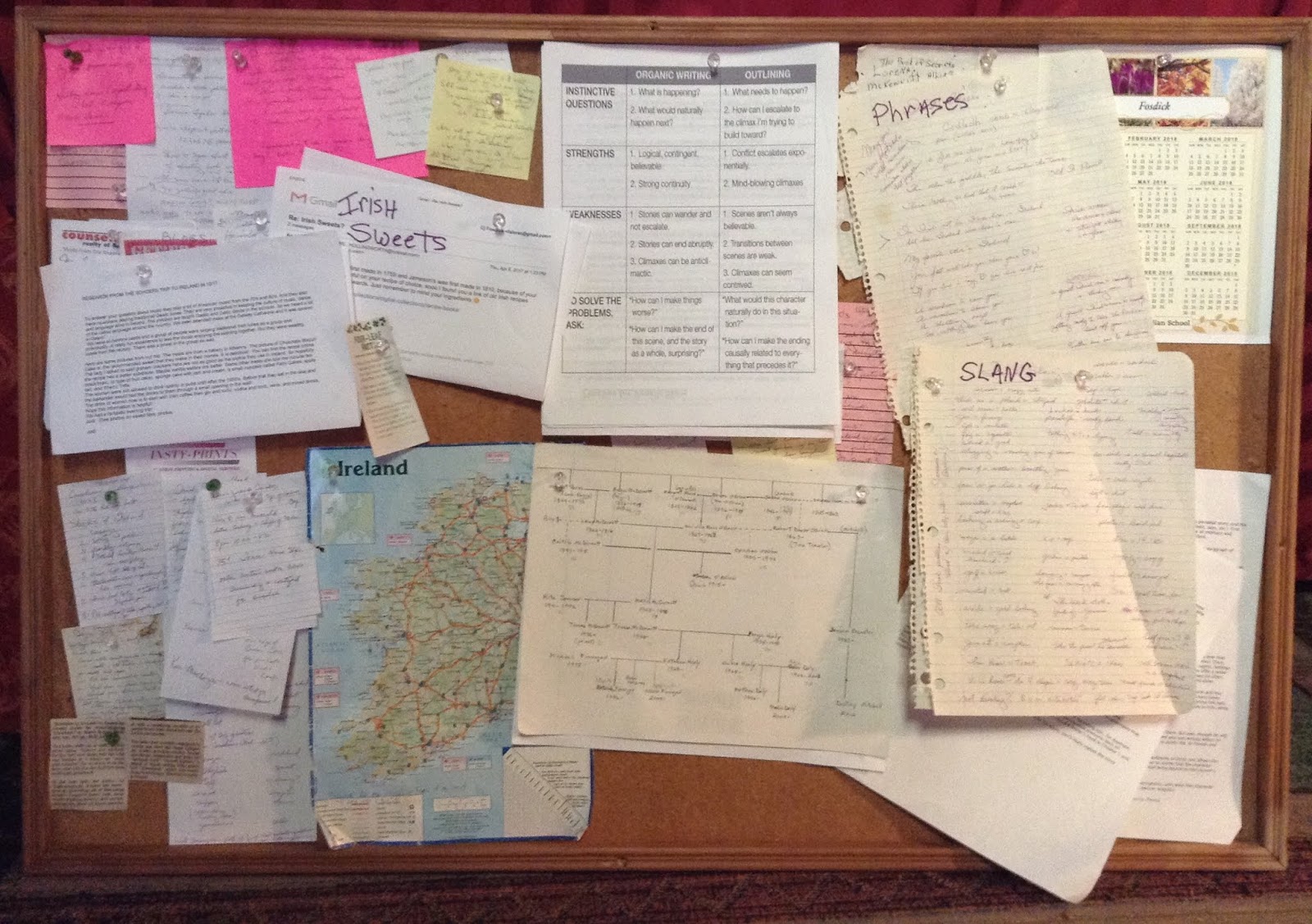
After pairing favorite combinations, I tweaked the profiles and slept on the decisions and alternates before making final choices.  Since this book involved an ancestral mystery, I also created an O’Brien family tree with birth and death dates for easy reference, particularly for the family graveyard chapter that finds my honeymooners looking for a specific grave.  For quick reference, I pinned the family tree, along with Irish words and phrases and miscellaneous notes to a portable bulletin board and propped it at arms length from my laptop. Before I hit chapter ten in the new book, a few names had to be changed. Naming one character Treasa just didn’t work when her fictional daughter introduced her as her mother, Treasa.


Did Shakespeare go to such lengths? “A rose by any other name would smell as sweet," as Juliet points out to Romeo in one of the bard’s famous quotes—which brings to mind another consideration. Romantic couples need names that sound as compatible as Tristan and Isolde, Claire and Jamie, Nick and Nora. Would Scarlett and Steve be half as memorable as Scarlett and Rhett?
Often, I like to thank friends or favorite relatives for their support by naming minor characters after them. Maria Schmidt, who was the riding instructor of heroine Jessica in The Accidental Wife, was once one of my riding students. Stella Lowry, Jessica’s boss in the same book, was really the late Sandra Lowry, the archivist and librarian of Ft. Laramie for over 35 years. Sandy was my historical “google girl” for years. When I told her I was naming a character for her, changing her first name to Stella, she laughed. “My mother-in-law’s name is Stella Lowry.” (The coincidence wasn’t lost on me; there have been several “Twilight Zone-like” coincidences in the series, but that’s another story.)

Choosing names for my real children, even names for some of our pets didn’t take this much planning.  But the prep and research does work. My fictional characters  (Tallie, Scout and Emery) approve of their unusual names, and readers do remember them. I can’t wait to introduce Caitrin, Cormac and Quinn in the new book!  


Amazon    WildRose Press     B&N     iTunes    Cj’sNewsletter     FB

Thursday, June 28, 2018

Ghost Busting at Ft. Laramie by Cj Fosdick


Vacations for writers are always rewarding when combined with research. The family vacation in 1977 that ignited my love of the historic west was mapped on poster board that had us following a route from Rochester, Minnesota through several states. Forts and battle sites were dots on our trail, along with wagon ruts, Register Cliff and Chimney Rock, but Ft. Laramie was the starring interest. I didn’t know it then, but the celebrated fort would invade several of my books. Original buildings including the cavalry barracks, Old Bedlam, and the Burt house would become specific sets in my historical fiction and time travel suspense. 


 For much of the 19th century, the strategically-located garrison was a fueling station and protectorate for pioneers heading west. By mid century alone, over 50,000 emigrants stopped at the oasis. The railroad began to cork the wagon flow in 1869 but the fort flourished for 20 more years until it closed in 1890.  Our 1977 counterpart of a pioneer conestoga was an orange Volkwagen camper with a tiny frige and seat cushions that converted to beds for two adults, two young children and a Schnauzer. Armed with cameras, notebooks and tape recorder, I was a kid in a candy store. A writer with a book in gestation.  A gestation that would last decades. (A long story-involving moves, more children, horses, and a manuscript stored in a freezer.)
Hubby and I returned to Ft. Laramie after our nest…and barn emptied in 2014. The Ft. Laramie National Monument had improved greatly between visits. An 1876 bunkroom re-created in the Cavalry Quarters became a key site in Book two, The Accidental Stranger. Was it also coincidental that our tour guide was a distant cousin of one of my neighbors back home?  By this time I was deep into Ft. Laramie history, intrigued by documentation of a young female ghost that appeared at the post every seven years, riding a black horse. The story is included in The Accidental Wife.


I was also corresponding with the great grandson of one of the post commanders and Sandra Lowry, the long-time fort archivist and librarian. I finally met Sandy in person during my second tour, before she took a medical leave that would end sadly. Happily, I had already dedicated The Accidental Wife to her, providing her a bit of immortality with a minor character in both books named Stella Lowry. She was amused by the coincidence since her mother in law’s name was Stella Lowry.

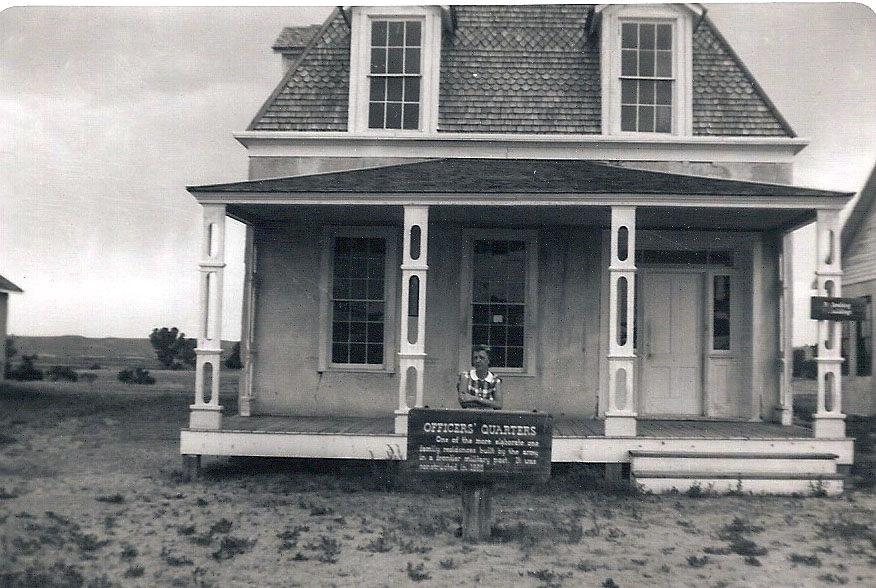
                Historic locations always make me feel I am walking lockstep with ghostly figures who lived centuries ago. The “coincidences” associated with Old Ft. Laramie weren’t lost on me. After my stepmom died two years ago, I found old photos of her and my late father taken at Ft. Laramie on their 1954 honeymoon. I recognized one of them was taken in front of the old Burt House where the heroine of my novel series slips back in time at a re-created tea party. My stepmom loved The Accidental Wife, but never mentioned that she had actually been to Ft. Laramie as a new bride. Yet another coincidence…or ghostly sanction to finally give birth to a story that had to be told?

 Click HERE to sign up for my newsletter to receive book news, mentioned recipes, and freebies.


                        JUNE SALE: Both Golden Quill eBooks selling for .99 this month only.                             
                               *********    Cj Fosdick Buy Links  **********

Monday, June 04, 2018

MORELS & MORALS by Cj Fosdick


June is blooming with both. MOREL mushrooms poke through Minnesota earth in wooded areas and around deadwood that surrounds our home each spring. My eagle-eyed daughter—who once could spot a 4 leaf clover while sitting atop a horse—has not lost her uncanny talent. Mid May, she quickly filled two plastic bags with the brainy-looking fungi while I spotted only freckled mushrooms that were big as dinner plates. Google and FB to the rescue!  My dinner plate mushrooms were called pheasant backs, according to a FB friend who suggested the edges were more edible than the middle. (Breaded and fried, the morels are a gourmet favorite for us—and most upscale restaurants when in season.)
    Connecting some dots with MORELS in mind, I was already deep into research—reading Irish fairy tales for Book 3 of my Accidental  Series.  Of course, fairy tales are known for their MORALS—silly or serious. And the Irish are definitely noted for their enchantment with leprechauns and faerie folk—the sidhe who star in their tales and superstitions.
   Sometimes, themes in fiction also drip into the morality pool. And if the moral in The Accidental Wife is that a grieving woman can be transformed in a summer of time travel to find her soulmate in the 19th century, the mirror image of that plot is the soulmate can spring ahead to reunite with her again in the 21st century sequel, The  Accidental Stranger.  (Time travel is a nifty plot filter when a man loves two nearly identical women and a woman loves two nearly identical men in the same family—each a  century apart.) I’ve considered an alternate MORAL in both books:  The transforming power of love bridges time—with twists and turns—to find that sweet “forever.”  Here’s hoping a cool drink, good summer reads and gourmet mushrooms are on your menu!
        Click HERE to sign up for my newsletter to receive book news, mentioned recipes, and freebies.

                        JUNE SALE: Both Golden Quill eBooks selling for .99 this month only. 
                           
                               *********    Cj Fosdick Buy Links   **********


Wednesday, April 11, 2018

Erotic Romance vs. Erotica: What’s The Difference?


There seems to be a lot of confusion about the two sensual genres that have become more popular since the rise of Fifty Shades of Grey. In order to distinguish the difference between erotic romance and erotica, the best place to start is to define what makes up a romance novel.


There are certain necessary components for a book to be considered a romance novel or novella. The Romance Writers of America (RWA) says a romance novel must have two things: “a central love story and an emotionally satisfying and optimistic ending.” That ending is often called a “happily ever after” (HEA).

Now that we’ve established the requirements of a romance novel, let’s take a deeper look at two genres that many people lump together.

There is a misconception that both erotic romance and erotica lack a compelling love story, and only describe kinky sex and hot men. This is just not true. There are stark differences in the genres. Erotic romance has the foundation of a captivating love story, takes the reader into settings that may be public or private with kinky or not-so kinky graphic sex, and has a happily ever after ending. Erotic romance is a romance novel by all definitions of the genre.

On the other hand, erotica describes the act of sex itself and doesn’t have to have a story attached to the sex. Erotica can have a love story, but there is nothing requiring its authors to produce one. There can be a satisfying and optimistic ending, but again, that is solely up to the discretion of the author. There is no guarantee of an HEA and a central love story like there is in erotic romance.

What does erotica share in common with erotic romance all the time? The answer is smoking hot, graphic descriptions of characters in a variety of sexual acts and lifestyles.

Erotic romance is not erotica, even though they are often grouped as one in the same.

About author Anna Lores

Anna started writing erotic romance as a by-product of insomnia. After a year of late night reading, she borrowed her son’s laptop and set about breathing life to her very own characters. A month later, she was surprised with a new laptop to pursue her dreams.
 
With a B.A. in English Literature and a desire to fill her world with wonderful stories she and her close friends could not just talk about, but gush over, Anna shed her job as mom of three in the midnight hours and began a journey into the publishing world.

Now, Anna is living her dream as a multi-published author of five contemporary and paranormal erotic romances with many more to come.

Looking for Anna Internationally?
https://www.AnnaLoresAuthor.com


Wednesday, March 21, 2018

NOW IN AUDIO

It’s been great fun getting Sex, Love, & the Spacetime Pinch out in an audio version. Listening to books has become a favorite activity. I began on a long cross-country drive, found it eased the boredom…and was delighted to learn my leg no longer cramped after a long stretch on the pedal! I took up listening next when I walked my daily exercise. Suddenly, rather than having to drag myself from the computer, I was eager to get out and discover what happened next in the story. :-) I also found listening to old favorites in their audio versions wonderfully relaxing for unwinding at bedtime.

Hearing one of my own creations read aloud by another person is a strange experience, both anxious and pleasurable. All at once I began “seeing” my book from a reader’s eyes. The perception is an eye opener. I’m anticipating the pleasure of listening to one of my romantic suspense novels next time. –– Eve Dew Crook, writing as Vee Bentley

Eve Dew Crook
Taking the Tumble
Peril, Passion, Peru
Sex, Love, & the Spacetime Pinch, 
  (ebook & audio)

Tuesday, March 20, 2018

Blog Interview with Dr. Alun Withey


(This interview first aired on 9-29-16 on www.jennifertaylorwrites.com
Jennifer Taylor is the author of the Rhythm of the Moon series, published by Wild Rose Press. Her third and latest, Echoes of the Moon, released in November 2017 .)


Good morning! I am delighted to have Dr. Alun Withey here with me today. A year ago, while doing research for Heartbeat of the Moon, I happened upon Dr. Withey’s excellent blog:
https://dralun.wordpress.com/ . He’s written an impressive number of informative and entertaining blogs on subjects as varied as the significance of the beard throughout history, and medical treatments for the time period.

Dr. Withey is an academic historian of medicine and the body, and a research fellow at the University of Exeter. He did his thesis on medicine in 17th and 18th Century Wales. You can imagine what an invaluable source his work is for an historical romance author like myself. It’s like stepping back in time, without the risk of disease and bad odors.
Welcome, Alun!

Alun: Thanks for inviting me onto your blog!

Jennifer: You are a 2014 AHRC /BBC ‘New Generation Thinker’. Can you tell us about that?    

Alun: Every year the New Generation Thinkers scheme gives an opportunity for 10 individuals to work closely with radio and television producers to develop their ideas for broadcast. It’s a highly competitive scheme, but is a fantastic opportunity for anyone (like me!) who enjoys reaching a broader audience for their work. Through the scheme I’ve been lucky enough to work on programmes for BBC Radio and the BBC Arts TV channel, often live, which can be both exhilarating and challenging, and speak to the public about my research. I’m certain that it’s also opened doors in other ways.
Jennifer: Your articles give readers a detailed glimpse into the everyday life of folks in the early modern period. Since the heroine of my series is a midwife in the 18th Century, I’m particularly fascinated with your articles on medical history. Here’s one of my favorites from 10/17/14: “Seventeenth Century Remedies You’d Probably Want to Avoid.”  https://dralun.wordpress.com/2014/10/17/10-seventeenth-century-remedies-youd-probably-want-to-avoid/
One of the treatments you uncovered for “collick” was to distill the testicles of a chicken (do I have that right?) and take a few teaspoons when the need arises.  
Do you want to add anything to that? What’s one of the most bizarre treatments you’ve ever come across?

Alun: Yes, you’re absolutely right about the chicken’s testicles! When I’m looking at early modern remedy collections I commonly come across one that I think must surely be the most unusual…and then another one crops up to take its place. Two favourites spring to mind: first is the ‘oil of swallows’ to treat shrunken limbs, which involves catching 20 (or more) live swallows, baking them to a powder, adding all sorts of oils and herbs, putting the pot into a hot dunghill for 2 weeks, then rubbing the oil onto the limbs.
The other is a cure for constipation, which directs the afflicted person to squat down over a bucket of boiling milk for as long as they can bear it…or until something starts to move!

Jennifer: I’m trying to imagine how people ever came up with such unusual treatments. And it’s also fascinating to think about how many people did survive and indeed thrived in that time period. What, in your opinion, did they do right?

Alun: Studying early modern medicine can be challenging. You have to balance cool academic detachment with the urge to burst out laughing at times. In all seriousness though, it’s important to remember that early modern medical remedies were based on a perfectly logical, coherent and complex model of the body – the humours. If you believe, as they did, that the body works in a particular way, and that sickness is something to be driven out, then the majority of the remedies make perfect sense. Also, the many ingredients that seem strange to modern eyes are also based on their assumptions about the properties and powers that they contained. So, products from animals, herbs etc, were all believed to have certain virtues, which could be harnessed to cure particular ailments. I often remind people that what we think of as modern medicine (biomedicine) has existed for not much more than a century, whereas beliefs in the humours lasted thousands of years. That being said, I’m not suggesting that people go hunting for swallows, or chopping the ‘cods’ off chickens for their medicines!
Jennifer: You’ve written at length about the social significance of men’s grooming. What would you like us to know about that?

Alun: The project I’m currently working on is looking at the health and hygiene history of facial hair, between 1700 and 1918. A big part of this is how shaving moved from being something originally done by a medical practitioner (a barber or barber-surgeon), and over time became part of the personal grooming routines of individuals. It’s easy to think of personal grooming as something that is unimportant and mundane. But the decisions involved in shaving (or not shaving), the growth of male skin products, scents, and even things like cosmetic procedures, all involve decisions. These can link into fashion, but also other important things like health, ideals of appearance, masculinity and so on. That’s why I think that it is important to capture the history of these things over a long period, to see how things change and, perhaps more importantly, why.
You are also the author of Physick and the Family: Health, Medicine and Care in Wales, 1600-1750, and Technology, Self-Fashioning and Politeness in Eighteenth Century Britain: Refined Bodies. I can only imagine the tremendous amount of dedication and patience it takes to unearth such detailed information.

Alun: I think if you love what you do then the work is made much easier. I’ve certainly covered a lot of mileage over the years, hunting for the sources for my books, but the joy for me is encountering documents that probably haven’t seen the light of day for decades. I’ve never lost (and hope I never do) the thrill of touching a centuries-old manuscript, which was once the property of a real 17th or 18th-century person, and with their words and thoughts on it. It’s as close as you can get to actually being able to speak to them.

Jennifer: Alun, I’m curious about what set you on the road to becoming a medical historian.

Alun: It was actually a complete accident. In 2006 I was looking for sources for my undergraduate dissertation, which I intended to be about the civil wars in 17th-century Wales. I went to a record office on one particular day, and asked the archivist on duty whether he knew of any contemporary sources. He thought, and then suggested a 17th-century notebook in their collections, which nobody had really worked on. I ordered the book up, and was immediately struck by some remedies in it, including a cure for smallpox, as well as a pill ‘to make a horse pisse’! I did some further investigating and discovered that very little had actually been written on Welsh medical history, so this became the subject of my undergraduate dissertation…which was published, and then informed my MA thesis…which ultimately led to the PHD.
What I love most about the history of medicine is that you’re ultimately dealing with people just like us – people who just wanted to avoid being ill, relieve their symptoms and get better. Even if we put all the grand theory and science aside, medical history makes us ask important questions about the human condition, and our journey through life.

Jennifer: What’s your least and most favorite part of your job?

Alun: I think the favourite parts would be the actual process of research – the thrill of the chase, and being able to pass some of these fantastic sources on, whether through formal ways like the academic publishing and teaching, or to a wider audience through the blog, or the media activities. It’s a joy to do.
I don’t really have a least favourite…although I guess something like doing the final edits for a book, or especially the index, might come close!

Jennifer: What’s next for you?

Alun: For the next two years I’m working on my Wellcome Trust-funded project on the history of facial hair, so there’s lots of research to do, writing and (hopefully) another book and other exciting things such as curating a museum exhibition in London in November.

Jennifer: Music is vital for me as a writer. Do you use music as inspiration for your writing?

Alun: I love all sorts of music – especially the blues/rock, but I can’t work to it…I just end up listening to the music without actually doing the writing. Instead I usually put something gentler when I’m writing – often classical music (Vaughan Williams is a favourite), or something acoustic.

Jennifer: Tell us about your guitar playing.

Alun: I’ve been playing for 30 years now and can’t imagine being without a guitar. When I’m working there is always an acoustic guitar within reach and I often pick it up and play absent-mindedly…helps me get my thoughts together. I used to have 12 guitars, but now it’s down to a more reasonable 8! There is still one guitar that I’d love to own – a Gibson jumbo-acoustic. Next time I go to the States I may come home with one!

Jennifer: Thanks very much for visiting my blog today, Alun.

Alun: My pleasure, and thanks for having me.

Alun Withey’s Bio:  I left school with no clear idea of what I wanted to do, and ended up in an office job, working for a major UK bank…where I stayed for more than 10 years. I’ve always had a love of history though, and especially the 17th century, and started to study whilst I was still working. In 2003, with the support of my family, I took the big step of leaving the bank and went to University, taking my BA, MA and, finally, my PhD on Welsh medical history in 2009, funded by the Wellcome Trust. The rest, as they say, is history! Finding medical history was a complete and happy accident.


Rhythm of Romance:                    
Where Love and Music Embrace  

Historical Romance: Mercy of the Moon, Book #1 of the Rhythm of the Moon Series 

                                    Heartbeat  of the Moon, Book #2
                                     
                                    Echoes of the Moon, Book #3