Wednesday, November 27, 2019

Grateful, Thankful, Blessed


By D.S. Lucas (a.k.a. Part-Time Sunshine at parttimesunshine.com)

This Thanksgiving season, I’ve been pondering what these three words printed on fall decor, clothing, and signs mean together: Grateful, Thankful, Blessed.
At first, I thought they were merely synonymous and interchangeable, redundant to read on ceramic pumpkins, sweatshirts, and wall hangings. They all convey a sense of appreciation, but with further consideration, I can now see how they vary.  Here is my take on these adjectives, and no matter what definitions I attach, you may have other theories. No worries, there is no right or wrong. Basically, they are beautiful words, manifestations of contentment that the entire world has the opportunity to use. I feel powerfully humble and fulfilled when I can say, “I am grateful. I am thankful. I am blessed.”
Thankful is a feeling, a sudden recognition of relief and/or satisfaction. Feelings come in a moment, affecting us inside such as when we are happy, sad, thankful, bored, or excited. Feelings are fleeting and fly away like birds who’ve emptied the feeder. After the feeler has felt and the moment has passed, a new feeling can replace the old one.
But if the feeler keeps feeling and dwelling on a pain or perpetuates a pleasure, the feeling can fester or grow into a state of being.  Feelings that are habitually harbored or entertained can turn into personality traits.  For instance, if someone continues to sprout and protect her happy feathers she may be deemed as a cheerful, optimistic, upbeat bird. Those who stay cloaked in sadness can become morose, pessimistic, or depressed mourning doves; they could benefit by flying around with a flock of cheer. One who constantly masks his true feelings and hides his head in the ground like an ostrich might be shy or insecure.
Someone who continues to give thanks for things great and small becomes grateful, a giving personality trait. Gratefulness grows into gratitude which is an attitude. Being grateful is an active characteristic of someone whose cornucopia overflows and she knows it; this simply means she has more than enough, she is thankfully aware, and shares her plentiful goodness with others.
Gifts of gratitude don’t have to be monetary or charitable gifts, but they can be. Grateful people are generous beyond dollars, offering time, attention, praise, kindness, laughter and prayers. Hence, they show their appreciation for others. The concept of pay it forward can be read on their palms, their open, giving hands.
One who receives another’s gratitude gifts might be thankful and grateful or eventually become grateful. *There is no time frame when a person can grow into this virtuous state of being, but the older one gets the more practice she has of playing the piano keys of a song I call, “Thanksgiving: giving thanks.”  Grateful is how people act after they have accumulated enough thankful feelings and earn this upgraded appreciation reward. 
The last term I’ll attempt to define according to my perception is: blessed. Being blessed is a spiritual gift granted to the saints, sinners, faithful and non-believers. Every one of us is blessed whether we know it or not.
I think to be blessed in the context of this post is to be in a precise moment or position where God works through others in His time and way.  God’s way for me isn’t always what I would have chosen for myself, but I am working on my faith to trust His process.
Blessings, like feelings, are fleeting and will come and go all the livelong day.  I am impatient and enjoy immediate gratification, so I admit, when praying to God, I wish to be helped, healed, or given an answer right away, on my terms. I crave a quick drive-thru service of supreme blessings, the Beatitudes of comfort, protection, mercy, fulfillment, and peace.
God is not a fast-food worker though. He is in no hurry and has all the time in the world, literally.  He is my Savior, and I am his servant. He is God who bestows blessings when they best serve His purpose for my part in the story of life, the mystery in which He is both the author and omniscient narrator.
I have faith that this good, all-knowing God has a better plan than I do, so I continue to clasp my hands together to give thanks as much as I can every single day. The more thanks I give the more daily miracles I find.  Blessed revelations just pop out when I least expect them, and like Louis Armstrong, “I think to myself what a wonderful world.”
Blessings are present tense bridges between this world to the spiritual one where we’ve been invited to spend eternity. Earthly blessings are temporal. Heavenly ones last forever.
Paying attention is the key to finding those double rainbows on a rainy day.  But then I miss a lot of blessings because I’m also distracted and inattentive, often rushing through moments instead of savoring them. I’m working on slowing down.
Thankfulness and gratitude lead to a treasure map of blessings, a foretaste of thy kingdom come. You can’t buy blessings, but you can find them with an open mind, positive attitude, and faithful guide. I am thankful to be on this journey in which I hope to be more actively grateful. I am blessed in more ways than I even know. I pray to be more present and aware.
I hope to seed, nurture, and grow a gratitude garden. I’m no gardener and could serve life in green-thumb-prison for all the plants I’ve neglected, dehydrated, and ultimately killed, but I will give it my best shot to sprout some blessed blooms that I can share with you. 

May you all shine on and enjoy the trinity of being grateful, thankful, and blessed.


Author of The Pencil Sharpener


Tuesday, November 26, 2019

Mini Fruitcakes for People Who Hate Fruitcake


These little gem-colored treats are chewy and sweet but contain no cake. I’ve found that people who dislike fruitcake will gobble these up! They’re also quick and easy to make, a welcome addition to your holiday cookie repertoire. You can easily adapt the recipe to include your favorite dried and candied fruits.

Ingredients:

2 cups chopped nuts: I use walnuts and pecans.

1 pounds pitted dates, cut into quarters

2 8-ounce packages of mixed diced candied fruit for fruitcake. In my grocery store, it’s called 

Fruitcake Mix.

I love the flavor of orange, so I added ½ cup candied orange peel, diced.

8 ounces shredded coconut. You can use sweetened or unsweetened—there’s plenty of sugar in this recipe as is.

a pinch of salt

1 can sweetened condensed milk

Combine all ingredients well, roll into small balls (Not gonna lie, it’s a sticky mess. Try oiling your hands first) and put into paper-lined mini-muffin tins. Bake at 300 degrees Fahrenheit for about 18 minutes until golden. Cool and serve. Makes three dozen.


 Rhonda Strong Gilmour
writing as Sadira Stone
Contemporary Romance with Heart and Heat

Monday, November 25, 2019

Poppy's Meat Pie


Christmastime always makes me think of my maternal grandfather, Poppy.  He loved the holidays and died just before Thanksgiving in 2007.  My twin boys were three at the time and only got to meet him once…while he was alive, that is.
            In mid-December of that year, Dan and I took them to my parents’ house in Florida for the weekend.  Twice during our visit, the boys’ gazes shot to my mom’s side at the same time.
            Both of them looked, but it was Geoffrey who spoke.  “Poppy,” he said, pointing.
            Each time, Mom nodded but said nothing.  The boys confirmed what she already sensed.
            Later that day, she, Dan, and I were talking by the pool.  The boys played close by.
            Geoffrey piped up, and his tone was adamant.  “No, no, Poppy.  Light on.”  He glanced to his side while his hands fiddled with a Spiderman action figure.  “No light off, Poppy.  Light on.”
            Dan gaped at him.  “Did he just say what I think he said?”
            Mom turned.  “What?”
            “I think he was talking to Poppy,” I said.
            Geoffrey’s gaze traveled up to a point about nine feet high, right beside the pool.  “Poppy, why are you flying?”
            Mom raised her eyebrows.  “Now I heard that!”
            Needless to say, the event made her weekend.
            On our return home, Geoffrey scampered into the house, then halted in front of our Christmas tree, whose lights were off.  He grinned.  “Hi, Poppy!”
            A minute later—by which time Geoffrey ignored the tree—Connor ran into the house.  He stopped and stared at the same spot his twin had.
            With a smile, he pointed to it.  “Poppy!”
            I felt my grandfather’s presence, strong as could be.  It was a reminder that those we’ve loved and lost are never far away.
            Wishing you and yours a joyous holiday season!
Judith Sterling


Saturday, November 23, 2019

Thanksgiving Magic by Helen C. Johannes


Last year we flew to Philadelphia to visit family. It was our first visit to the City of Brotherly Love, and we just happened to choose their coldest Thanksgiving ever. Being from northern climes, we knew how to dress for our typical get-around-town-in-the-car routine. But that didn’t prepare us for the ‘big city’ and having to walk 10-30 min. everywhere because parking is next to impossible. Brr.

We enjoyed the obligatory Philly Cheesesteak, visited the Liberty Bell, saw Ben Franklin’s grave, toured the fascinating Philadelphia Mint (amazing how they make coins), and learned how to use the commuter trains. Having visited London and ridden the Tube, this was pretty familiar territory. So was the basic drab, utilitarian nature of most stations and cars.

After a fantastic Thanksgiving dinner (which I didn’t have to make—yay!), we decided to spend Black Friday not shopping but seeing the Christmas offerings downtown. So we trudged 10 min. through the coldest morning of our stay, boarded the drab commuter train, and rode to see the Christmas Village, the Comcast show, and the Macy’s Dickens Village, stopping for supper at Reading Market. Exhausted by our full day out in the cold and wind, we trudged once more to the train station where we encountered…Thanksgiving Magic.

The drab, utilitarian train we’d ridden earlier that day had been transformed into a gift-wrapped wonder. We rode home in thankfulness for those who’d performed this magic.


Happy Holidays

Helen


Brave Men, Bold Women, Hearts in Search of Home


LORD OF DRUEMARWIN
THE PRINCE OF VAL-FEYRIDGE
BLOODSTONE


Friday, November 22, 2019

Let’s All Gather


This time of year always makes me think about gatherings, both of family and friends. Although loved ones certainly do visit on other occasions throughout the year, it’s the holidays that call us together. Folks tend to travel from far and near, making fellowship a priority. The ties that bind us become just a little bit stronger. And when I remember such gatherings during my childhood, I think about…the dining room table.


My mom usually hosted our family gatherings, and following the feast, the men inevitably retired to the living room while the women lingered around the table. My mom being of British descent, and tea being endemic, every female from the youngest to the eldest had a teacup in front of her. Conversation would range widely, from current news to relatives who were no longer with us. The tea leaves would be read, and stories would abound. I can’t help but wonder how those conversations contributed to the woman—and the writer—I am.

My mom has long since gone to join those deceased relations of whom we spoke. And I’ll admit, our gatherings had become little more than a fond memory for me. But life is funny. Recently I had a chance to get together with a cousin I hadn’t seen in more than a decade. We met not at my mother’s, but my daughter’s home. We sat around her dining room table sharing tea and stories of relations past and present. And, do you know what? The old feelings came flooding back—I felt the same comfortable sense of belonging and acceptance, and the tightening of those ties that bind.

I believe that pieces of those who went before us, travel with us. They are imparted in words shared, in laughter, and often in the wisdom of women. Maybe that’s why I love words so much. And maybe that’s why when we gather around a table, it means far more than a meal shared. This year, when you gather around your holiday tables, may the words you share come straight from the heart.


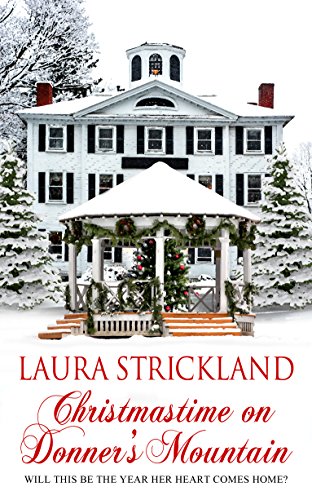
Christmastime On Donner’s Mountain
For most of her life, Becca Monroe’s been running. The urge to see what lay beyond the next horizon took her away from Donner’s Mountain and the man she loved. Now, back for what will surely be her grandfather’s last Christmas, she’s caught in a tangle of unresolved emotions that leave her torn between the impulse to flee and the desire to stay.

Jack Donner never stopped loving Becca, even though she deserted him. Better than anyone else, he knows how cruel it would be to fetter her wild spirit, and he doubts she could ever be happy living in one place, on his mountain.

Can memories of Christmases past remind Becca what truly matters? And can love convince Jack to give her one more chance, even if it means risking his battered heart?


On Amazon: https://www.amazon.com/gp/product/B075XFHNQ8

Happy Holidays
Laura Strickland


Thursday, October 03, 2019

DUE DILIGENCE by C J Bahr


DUE DILIGENCE:
RESEARCH FOR ANY GENRE, ANY ERA, AND WHY IT MATTERS

From the Santa Clarita Romance Writers

Presented by:
C J Bahr


Getting To Know The Author:

First published in Marion Zimmer Bradley’s “Sword & Sorceress” anthology, CJ was bitten by the writer’s bug and hasn’t stopped since.  Her award winning first novel, “Walking Through Fire”, a Scottish ghost romance, is published by The Wild Rose Press.  She is currently working on the third book in The Fire Chronicles series, as well as, a new Urban Fantasy starring a kick-ass Time Enforcer.

When her pen isn’t scribing, you can find her busily cutting and tracking music for film and television. With over twenty years of music editing experience, her credits range from “Northern Exposure” and “The Muppets Christmas Carol,” to “The Kill Point” and “The Middle.”


Why Research Is Important (and not just for historical/period pieces):

Research gives accuracy and authenticity in settings to make them believable and bring your stories alive.

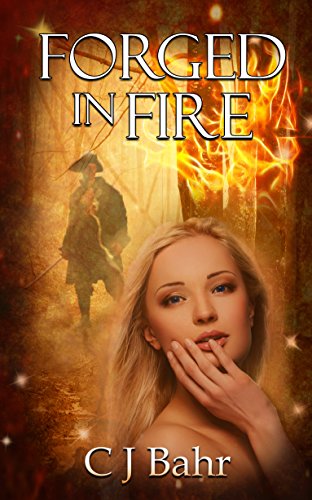
Good Example:  “Forged In Fire” (my second book in my Fire Chronicles series) deals with time travel.  Weather played a huge part in the atmosphere of the story.  There was lots of snow, sleet and miserable cold weather.  It was set in the late 1700’s outside of York, England.  Realizing I had no idea if such weather was possible I looked it up in an Almanac for that time.  I checked out the weather for January 1795 in York and happily found out it was the coldest weather they ever had experienced to date.  I caught a lucky break.  I received an email from a reader of historical romances who had actually looked up the same fact and congratulated me on getting it right.

Good Example:  “Playing With Fire” (book 3, WIP) is set in present day New Orleans.  Though I don’t have to dive deep into period research, I still wanted/needed to get details right.  My hero detective is called to a murder scene around five in the morning.  His partner brings him coffee.  I researched what coffee shops were open 24 hours and came across one that is actually on the way to my murder scene.  It was a kind of a fun small detail to bring the story to life — especially if one of your readers is familiar with the area.

Bad Example:  A favorite author of mine (who shall remain nameless), who I have read everything she has written and will continue to do so, wrote a contemporary urban fantasy series where one of the books was set in Burbank, California.  I’ve lived there for over twenty-five years, and thought, “oh, this will be fun”, and for the most part it was.  I don’t mind she made up a fictional television/movie studio, but what did bother me was when our heroine made it from Burbank to Santa Monica in ten minutes.  Any So Cal reader would know this was ridiculous and impossible.  All it would have taken was a few minutes to “Google” map the direction and know it was wrong.  Kind of like the movie “Speed”, the freeways the bus connected too were way wrong and it will pull the reader/viewer from the story if they know the locale.

We’re not going to please everyone, some people won’t agree with your research, but we should take responsibility to make it as accurate as possible.

Ultimately, as author, Audrey Abbott, points out:  “You select details that will anchor the place and time and help to enrich your story and flesh out your characters.  You are not going to spend endless paragraphs describing Anne’s garden in Surrey, but a mention of sprigs of rosemary (signifies remembrance) that she carries within her deceased mother’s prayer book as she reluctantly walks down the aisle at her first wedding conveys a great deal about Anne’s emotions at the moment.”

My purpose today is to help your research skills by sharing tips and tricks of the trade.  I’d like to shout out to all the wonderful authors who reached out for many of today’s tips (like Audrey Abbott above, I’ve given credit to where it is much deserved with the information I’ve chosen to use), thank you all so much!

First Caveat:  As author, Laurie Alice Eakes, points out: “Don’t let research get in the way of words on the page.  Make a note to yourself to ensure correctness of fact or figure or geographical detail, and then keep writing.  Later, when you’re not in the middle of producing words and keeping the flow going, you can fill in those blanks.


Research Tip    GOOGLE:

Google search engine is a great place to start, possibly leading to some of the other tips I’ll be mentioning later.  But, you really should verify with other forms of sources.  Just because you found it on the Internet doesn’t mean it’s true or accurate.

As author, Maria Powers, states:  “This is especially true for Historical.  She’s always amazed how many authors justify and defend their use of tropes because ‘it’s always been done this way in Regencies/Westerns/Vikings’ etc.  It’s our jobs as authors to dig deeper and check our assumptions and biases.  We should not be writing simply to uphold the status quo.”  She also suggests that means rethinking gender roles, etc…for contemporary novels.

You can optimize your Google search by using different keywords and phrases to get what you want — especially using Boolean search terms.

BOOLEAN — search terms:

  The terms must be in all CAPS.  Google will ignore the word if it is in lower case.

  OR — Searches for multiple words.  The search results may have one or more of the words searched, but do not need to include all words.  The search term OR broadens your search, and is usually used to search similar words.  Such as (PR OR Public Relations)

  AND — Searches for multiple words that must all be included in the websites results.  AND usually joins terms that are different (not similar like OR).  Such as (Bars AND New Orleans).

  NOT or Minus Sign (-) — Search will return pages that do not include these terms.  For example, NOT London should exclude London in say a search for Regency Era information if you wanted to find out what was going on outside the haute ton in England.  Such as (Regency NOT London).

  Quotation Marks ( “ ” ) — Put quotation marks around an exact phrase you want to search, such as “umbrella drinks” so that the terms are not separated during the search.  If you didn’t bind them in quotes you’d get possible results for umbrellas for the rain, and drinks with no umbrellas.

  Parentheses ( ) — Parentheses are often required to group search terms together.  For instance:  (Angels OR Archangels OR Guardian Angels) AND (Heaven OR Hell OR Earth).


Author, Daphne Walter, had a great tip (if possible) to not limit the Google search to English only.  Some of her best results came in Dutch and Old French.  Learn how to use Google Translate or Babelfish.  The online site LEO is best for German translations but only does one word at a time though that might have changed since she last used it.

Author, Kathleen Buckley, suggested if you are having difficulty finding something useful when you Google (18th century London coaching inn, for example), try using your search term in Google Images instead.  Images will come up you can click on and lead to possibly informative websites.

Just like me, author, Rhoda Novak, Google’s restaurants, City Chamber of Commerce and Universities for current and historical facts.  On University websites sometimes you can find newspapers, alumni, historic and new photos and maps.

Last but by no means last, don’t forget Google Earth (especially the ‘PRO’ version — Google Earth Pro).  As author, Elizabeth Langston, reminded me: “It’s a ‘glorious’ website to visualize how a location looks.


Research Tip    Libraries:

Libraries are probably the next most popular after Google, sometimes even before, as many authors agreed.  As mentioned before, having the Internet is amazing, but not everything you read there can be true.  And since almost anyone can get their hands on a library card you can access your library’s online databases containing photographs, maps, all kinds of articles on any subject at your fingertips, day or night.  Or walk into a local branch; this is a true research tool to use.

  Children’s Books

This has come up with several authors.

Author, Patricia Bond:  “Hit your library especially the children’s section.  For both contemporary and historical — the children’s books boil the info down to quick and easy understanding without wading through tons of academic text.  Once you have a feel for the time/place you can research specific times more in depth as needed.  Look for story settings for kids — illustrated books are great for this, for both genres as well as how people dress in their time/locale.

Author, Bob Richard, goes with Jeopardy! Winner, James Holzhauer’s approach using children’s books especially when it comes to a subject he wasn’t interested in and couldn’t get into with adult reference titles.  For certain subjects, there were probably multiple children’s books available.

  Librarians

Form a relationship — ask about the topic you are researching and inquire if there are any tools/databases the library subscribes to that the general public might not be aware of.

Librarians can point you to research materials, books, databases and nonfiction DVD’s.  They have access to books that aren’t in circulation and can let you view them in the library.


Research Tip    Go To The Source:

Almost every author, including myself loves to “go to the source”, find an expert or specialist, or travel there if you can.

Find and read blogs by people who’ve experienced things you’re writing about.  In author, Jacqueline Diamond’s mystery series, she writes about a schizophrenic doctor who’s a friend of the hero’s.  She was amazed to find blogs by and about schizophrenic, high-functioning doctors.  She also has a friend who is a doctor and forensics expert who’s willing to answer very specific questions and several of her beta readers are nurses.

Find and cultivate acquaintances that are willing to help you.  I wanted personal information on New Orleans for my current WIP.  My friend had a friend who lives there and introduce us to each other.  She gave invaluable first hand knowledge.  She also connected me to an ex-NOPD detective who had wonderful insider information when I wanted to know more about the local police.  Plus, I had another friend who went on vacation there recently, and I ask to her to specifically check out a few locations I use in my book that fit her itinerary.  She recorded hysterical on location video complete with narration — not only was it entertaining, but filled with her personal take while having live visuals.

Under this heading — if you’re researching locations, use travel feedback from people who have been there.  Author, Ruby Hill, recommends homemade videos whenever possible because they will remark on things a travel brochure doesn’t and which others might take for granted.  Search for travel blogs, especially amateur ones.

Another way to gather info from acquaintances are the writers’ boards.  Post a question, and I swear someone will have the info or knows someone who does and hooks you up.  It’s how I got most of this information for my presentation today.

Talk to anyone you can find who might know something.  Author, Patricia Bond, points out your “elderly neighbor who lived through WWII and what it was like to be on the homefront while her mate was fighting.  Your children’s teachers — there’s a reason the history teacher is teaching history.  Whether your hero spies for Richard III or Dwight Eisenhower, the history teacher can give you a feel for the politics of the time and could make your story more real — and maybe lead you to that plot point that makes all the difference.”

Talking directly to your “expert” can get so much more detail you can sift into your story.  Again, author, Patricia Bond has a great example of a different slant:  “like finding out some Yankee soldiers wore green uniforms instead of blue.  They were the Pennsylvania Sharpshooters unit who spent their time sitting in trees working as snipers — so don’t give them shiny brass buttons!”

Author, Sally Brandle, joined multiple Facebook groups for her, “Love Thrives In Emma Springs” series.  She asked for stories, quirks and distinctive traits for miniature horses and mules and was amazed by the responses.  A member of the local mule-loving group even invited her to meet her mules and speak at a Back Country Horseman meeting where she sold books and garnered new readers.

Author, Jeannie Lin, likes to build up a network of authors who write in her similar genre.  She finds research is a hustle and a game of six degrees of separation — who can you find to get your hands on that research book you MUST have.  It’s all about networking — your fellow genre authors usually are more than happy to share research.

MOST IMPORTANT:  be sure to give recognition to your expert in your acknowledgments.  They were gracious with both their time and knowledge.


Research Tip    MISC:

In no particular order…

  Old Telephone Directories — Author, Fleeta Cunningham, finds lots of period details for her vintage books.  They give her location and service information for all kinds of local businesses and professional offices.  She loves the classified and social pages of small town newspaper for the appropriate years for descriptions of the special events central to small town life.

  Visit in person wherever you are setting your story.  New Orleans, here I come!  Nothing gives your story more authenticity than when the author can relate the setting clearly.  As author, Patricia Bond says, “not just what it looks like, but how it smells, how the wind blows, what it FEELS like.”  Visit historical sites like battlegrounds, restored towns, etc.  Ms. Bond lucked out on a trip to Gettysburg and stumbled on an re-enactment weekend and got a true sense of what happened and was able to speak to some of the re-enactors themselves — a bunch of the info ended up in her book, “Building A Christmas.”  She also recommends your local Historical Society or check out if there is one where you’re visiting.  Museums that are quiet usually have staff that is excited to talk to anyone who is interested.  Ms. Bond was able to get access to the restricted area and was able to actually touch a vintage dress made in 1825 (with gloves on obviously).

  More than one author recommended for contemporary settings even exotic ones to check out your local library’s travel section, AAA (automobile club) for maps, or even Pintrest boards.  Again, don’t forget about Google Earth, either.

  Author, Roz Lee, swears by www.ancestry.com when writing her 20th Century historical, “Suspended Game”.  Ancestry had every page of every Sears & Roebuck catalog printed on their website.  “If you need to see what people were wearing, buying and had in their homes from the late 1800’s until the 1990’s, this is a great resource.  Need to know what prices were like in say, 1936?  No problem.  The 1936 catalog is over 900 pages.  Ancestry can be a wealth of information in regards to selecting names appropriate for the time period (any time period) as well as getting a grip on wages and property values.

  Author, Daphne Walter, recommends British History Online, which has a plethora of useful historical documents.


  Author, Elizabeth Langston, came up with several great research tips.

            •Wikipedia — use as a launching place because it’s “not authoritative by itself, but many of the articles have other resources linked that are.”

            •YouTube — there is a clip for everything.  “Dance, cooking, building a stacked stone      wall.  If you want to learn, YouTube has it.”

            •Ask a question on Q&A site like Quora.  “You’ll have to cross-check the answer, since   the responders are self-proclaimed experts, but they could be pointing you in a great   direction.  The real experts include links to their sources.”

            •One I never thought of but which is awesome!  “Drunk History!”  “The television series is funny, the reenactments are amazing and the history is solid.”


  If your internal editor asks, “did they say, ‘Shazzam!’ in the 1860’s, or if a certain slang term or swear word was in use, author, Kathleen Buckley, recommends the place to check this and other words out is:  The Online Etymology Dictionary (www.etymonline.com)


In Closing:

Thank you so much for inviting me to speak today at the Santa Clarita Romance Writers’ meeting.  Hopefully you have learned something new or remembered something you might have forgotten.  It was a pleasure to meet you all.  I look forward to all your awesome novels and stories to come!

C J Bahr
21 September 2019


Tuesday, July 30, 2019

Witches’ Cliff - a novella about modern-day witches


It’s the middle of summer and hot as a firecracker. So, with that in mind, let’s think about falling autumn temperatures.  Witches’ Cliff is a Halloween novella about modern-day witches.

When Penelope Winters stepped out of her black-as-night BMW at the Deerbourne Inn located in Vermont, she felt she was home. Her family was originally from Vermont and she and her mother left when she was a baby. She’d never been back.  But there was something about the place . . .

Penny came from a long line of witches. She and her late mother were modern-day practicing wiccan ad she was there for Halloween – and not just for the trick-or-treating. She planned to see where her family once lived and try to talk to her dead grandmother on Halloween night.
Modern Halloween tradition came about from the Christianizing of ancient pagan practices. The trick-or-treating we see today probably began as parades for All Souls Day (also known as All Hallows Day), a Catholic holiday which now falls on November first. The ancient festival was then renamed All Hallows Eve. October 31st is the midway point between the Autumn Equinox and the Winter Solstice. It was just the time for Penny to contact her ten-times great grandmother. She had a question she needed help with.
Penney knew it was more than a feeling that she was not the only witch in Willow Springs, Vermont. Would that be good or bad? Willow Springs had once had their own witch trials but instead of being burned at the stake, the unfortunate women were thrown from a rocky cliff and Penny planned to see that cliff while she was there. It would be just the place to contact her grandmother who died a horrible death along with others in that dark time.
Penny came with a purposed to the inn that weekend, and then she met Liam.
The Deerbourne Inn series is a fun romp through the Vermont bed and breakfast scene.  Several authors for The Wild Rose Press wrote stories of various genres and times.  Check out Witches’ Cliff and the other stories of the Deerbourne Inn. 

Peggy Chambers


and other online retailers


Friday, July 26, 2019

The Izzy O’Donnell series – Eye for and Eye.


I am Jocelyn Pedersen, a Canadian-born award-winning, AP-published, professional journalist with hundreds of published clips in various newspapers and magazines. And I decided to write a novel. A lover of the mystery and thriller, I digest every piece of Criminal Minds with my friends and family. And that is where the Izzy O’Donnell series came to mind. The first in the series is titled Eye for an Eye.

Rookie detective Izzy O'Donnell is on the trail of a serial killer who's murdering victims and leaving behind body parts wrapped in Bible verses.  Izzy tracks him down with the help of her two partners, Moreno and Cal.

Her friend, Apple, thinks she's telepathic and she and her pet rabbit can smell death on Izzy's clothes.  Unnerved by unexplained dreams, Izzy forges forth to solve the case. A homeless man, a philandering televangelist, and a mentally challenged gardener are among the suspects who distract Izzy from seeing the killer, who has been getting to know her all along.

Izzy is a Rookie - it is obvious the way she up-chucks on a crime scene and hesitates to make her opinions known.  She’s at the bottom of the rung on a long ladder that may never reach the top.  But she has instincts and knows a pervert when she works a crime scene. And they have one in this case.
She was a uniform cop for years and grew up in a household of policemen.  Her dad retired from the force, and now she looks after him and his bar after every shift. The most important thing in her life is to make him proud of her and to become the caliber of cop he was.

The latest round of murders are getting the better of her and everyone who works it.  And that is just how the perp wants it.  If they are pitted against each other, the crimes will never be solved. 
Check out the first in the Izzy O’Donnell series – Eye for and Eye.


An Eye for an Eye
by Jocelyn Pedersen

and other online retailers


Wednesday, July 24, 2019

Blooming Justice


Erin grew up in a loving home – just she and her mom after the death of her father. They had little money, but they were happy. She had friends, family and a plan to go to college to become a lawyer. 

Todd grew up with a bully for a father, a scared mouse for a mother, and a brother who left home as quickly as possible.  The two things they had that Erin didn’t was money and power.

They could not be more opposite.

Erin quickly realized she was out of her league when she accepted the date from Todd and showed up at the senior prom in a borrowed dress.  She was bullied and sexually harassed at the prom in front of the entire senior class.

Once at college, Todd escalated from bullying to rape and Erin began to hear about it on campus.  She wasn’t certain at first who they were talking about and then it became obvious. Todd was on the University of Tulsa campus too and he was the main topic of conversation some nights in the girls’ bathroom at the library.

After the incident at the prom, Erin grew up quickly the first year of college with a new job in her aunt’s law firm, leaving home, and learning about the law.  She still maintained her friends, but she had changed. 
 
According to Webster’s dictionary a bully is someone who seeks to harm, intimidate, or coerce someone perceived as vulnerable. To persecute.

Stuck on the same campus as Todd, Erin decides it is time to turn persecution into prosecution with the help of her aunt, an attorney in a prestigious Tulsa law firm after her best friend, Bernadette, goes missing.

Blooming Justice is the first in the Keystone Lake series set in beautiful, green, eastern Oklahoma. It is a new twist on an old story. Money and power do not keep you from justice and Erin will prove it.

Peggy Chambers
http://peggylchambers.com/

and other online retailer


Thursday, July 18, 2019

Publishing in Today's Market Part Two

I remember 15 years ago before we started The Wild Rose Press, writers were starting to talk about epublishing and not in a positive light.  But RJ Morris saw that this was going to be the next big thing in publishing and we decided to open The Wild Rose Press knowing there were authors who wanted this option. Some writers were resistant, they didn’t think that was “real” publishing. 

At the same time, authors who were published through vanity presses were scorned.  They were looked down on as not good enough for traditional, royalty paying publishing. How soon the times change. Now small press, traditional, and yes, even vanity publishing, are all options for writers. All are career choices for many successful writers.

While The Wild Rose Press has always been and remains a royalty paying publisher in the traditional sense of the word, it has become apparent over the past few years that in order to stay current and meet the needs of all writers – we needed to offer more.

We worked with our business advisors and came up with a division of the company called The Write Advice (www.thewriteadvice.com). 

TWA is not meant to replace The Wild Rose Press. It is a different and separate option for writers who want more control over their books. The Write Advice allows writers the option to pay the one time, upfront costs to get their books published.

TWA offers options for authors. An author just starting out can pay for coaching/consulting sessions by phone or email or a combination of both. Authors who purchase these packages have the sole attention of a professional editor or marketing person at their disposal for any and all questions.  Again, it is a service that we found was needed. Authors who have purchased this option were thrilled with the one on one attention they received.

There are those who will say that we have become a vanity press. They're wrong and it's just not true. We are and will always be a publisher that is open to what is needed in today’s market. We are offering writers more options. We're a business that wants to meet the needs of authors.

There isn’t a right or wrong way to be published.  Our mission, to grow writers into authors, remains the same now as it ever was before. We are customer oriented and believe in the personal approach to all we do. We are hands on and want what is best for our authors. 

Voted P & E Best Publisher of the Year 11 times isn’t a small achievement. We value your support. Having authors who have been with us since 2006 speaks volumes.  And now, offering more options for writers and not forcing them to only be published in one way is how we continue to evolve.  Vanity press?  Traditional publisher? Small Press? E-Publisher? It doesn’t matter what someone might call us. we will always be here to meet the needs of authors.  We want to be YOUR option when you decide what to do with your next book.  

Rhonda Penders
President, Editor-in-Chief
@wildrosepress
Instagram - thewildrosepress